Tag: Bronx

  • When Health Education Becomes Empowerment

    When Health Education Becomes Empowerment

    In the Bronx, where health outcomes are among the lowest in New York City, access often begins not with treatment, but with information. The Bronx Health Link was created on that premise: that health education is as critical as any medical procedure, especially for immigrant and Spanish-speaking families navigating complex systems for the first time.

    The organization operates as both a resource hub and a convener, bringing together local clinics, advocates, and residents to address disparities that have long defined the borough. From maternal health workshops to chronic disease prevention sessions, The Bronx Health Link meets people in the neighborhoods where they live — translating medical knowledge into actionable guidance.

    For many Spanish-speaking residents, these programs are the first point of contact with a system that can otherwise feel inaccessible. Through bilingual workshops, outreach events, and culturally grounded materials, the organization demystifies processes that often deter care: how to schedule appointments, request interpreters, or access city programs without fear of immigration consequences.

    This work reflects a larger shift in public health — one that understands knowledge as power. When families know their rights and the resources available to them, they’re better equipped to advocate for themselves inside hospitals, schools, and social-service offices. For mothers, that can mean safer pregnancies and births. For older adults, it can mean managing chronic conditions before they escalate.

    But education doesn’t stop at information sharing. The Bronx Health Link also pushes for structural change, partnering with policymakers to address the root causes of inequality. Its reports and community listening sessions inform citywide initiatives on maternal health, language access, and racial disparities. In doing so, it turns community voices into policy data — a feedback loop too often missing from traditional healthcare.

    In immigrant communities, trust is built through consistency. The Bronx Health Link’s approach — returning, listening, translating — has helped reframe public health from a distant authority into a shared responsibility. Each workshop, each conversation, narrows the gap between awareness and action.

    When access begins with understanding, education becomes more than outreach. It becomes empowerment.
  • In the Bronx, a Clinic That Speaks the Language of Care

    In the Bronx, a Clinic That Speaks the Language of Care

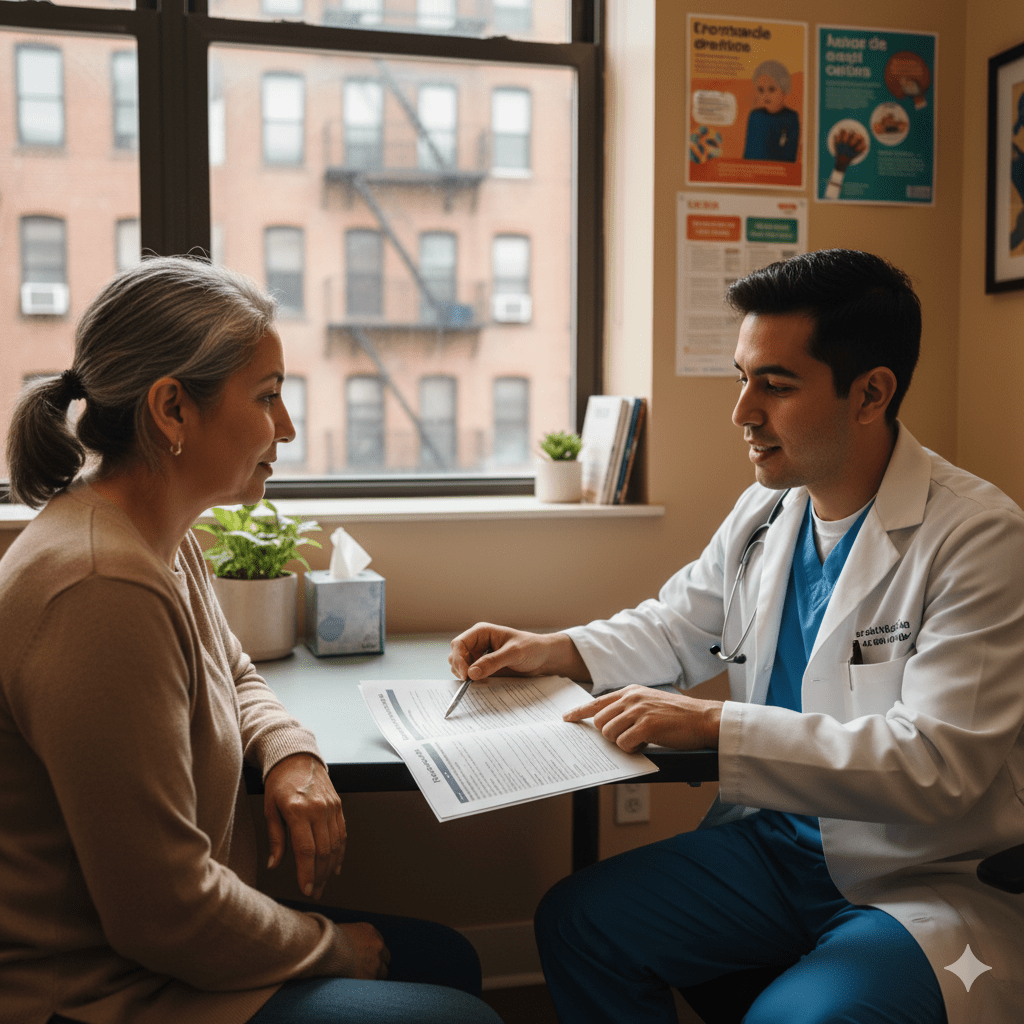
    For many Latinx immigrants in New York, a doctor’s visit is about far more than medicine. It’s about language, trust, and whether the space feels safe enough to describe what hurts. In the Bronx, La Clínica del Barrio has spent decades centering those needs — proving that care is not complete until it’s understood.

    The clinic was established to close one of the most persistent gaps in public health: access for Spanish-speaking communities. In a borough where nearly half of residents identify as Hispanic or Latinx, linguistic barriers still determine who seeks treatment, who delays it, and who is turned away. La Clínica del Barrio responds by offering every major service — from primary and women’s health to dental and mental-health care — in Spanish and English.

    But the clinic’s work goes beyond translation. Its staff are trained to address the social realities their patients face: housing instability, employment precarity, and immigration stress that often manifest as physical symptoms. Wellness education sessions run in both languages, emphasizing prevention, nutrition, and stress management within a culturally familiar framework. It’s an approach built not on charity, but on cultural fluency — recognizing that health outcomes improve when care reflects identity.

    The model stands in contrast to larger hospital systems that rely on over-the-phone interpreters or translated discharge sheets. At La Clínica del Barrio, interpretation happens in real time, person to person. Patients don’t have to explain their history twice, and providers don’t have to guess. That immediacy fosters trust — a currency as vital as any prescription.

    Yet even with strong community ties, clinics like this operate within fragile funding structures. Policy shifts, grant cycles, and staffing shortages can all threaten continuity. Advocates say sustaining such spaces is crucial, especially as federal rhetoric around immigration continues to deter families from accessing public benefits. When fear drives people away from hospitals, neighborhood clinics become lifelines.

    La Clínica del Barrio’s impact can be measured not only in appointments booked, but in confidence restored. Each interaction — a translated form, a familiar greeting, a provider who understands both language and context — rebuilds faith in a system that too often erases the people it serves.

    In the Bronx, health equity isn’t theoretical. It’s spoken, clearly, in Spanish.