Blog

  • Fighting Stigma in Two Languages: The Latino Commission on AIDS

    Fighting Stigma in Two Languages: The Latino Commission on AIDS

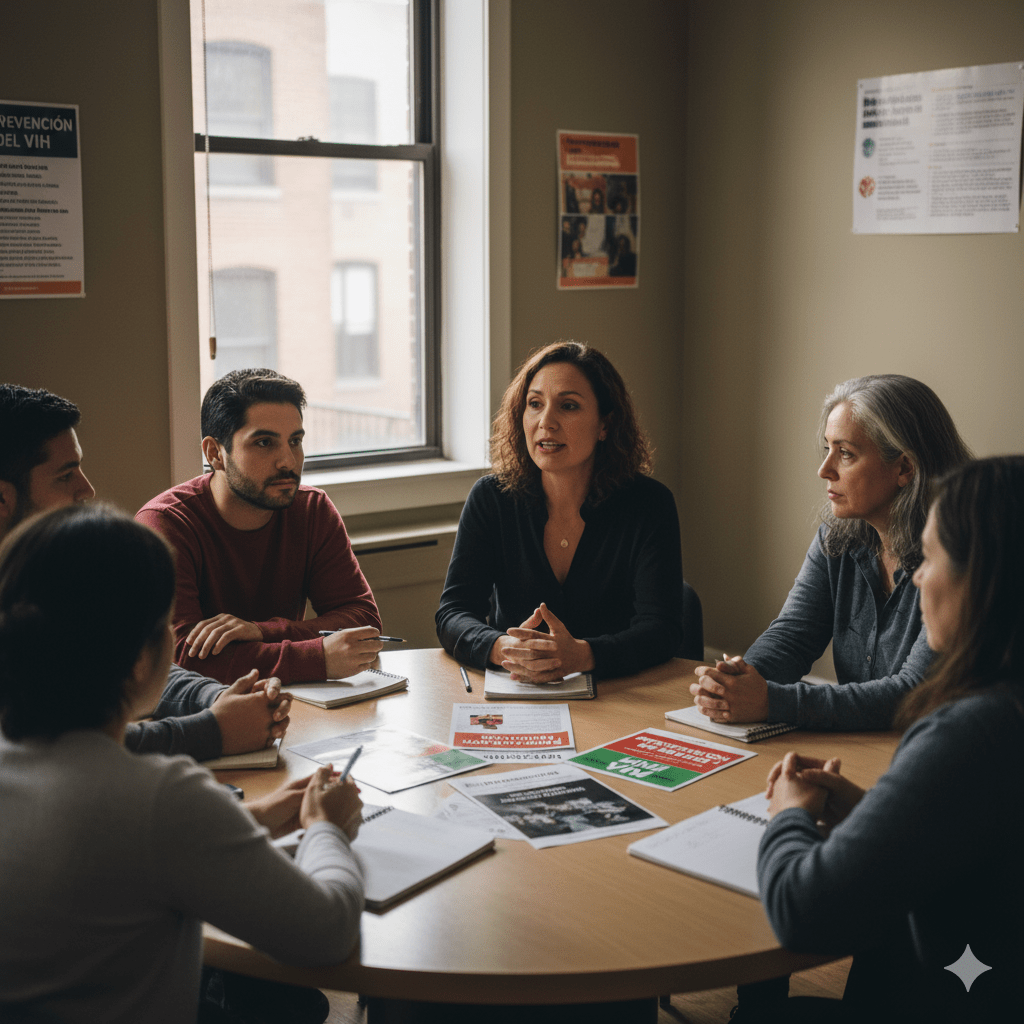
    For decades, HIV outreach in the United States has struggled with one core gap: language. Across Spanish-speaking and immigrant communities, misinformation has fueled silence — and silence has fueled stigma. The Latino Commission on AIDS was founded to change that, using culturally grounded education to reach people long overlooked by traditional public health campaigns.

    Based in New York City but serving communities nationwide, the Commission focuses on prevention, testing, and treatment through a bilingual lens. Its outreach staff work in neighborhoods where access to care is limited and stigma remains strong, offering workshops and rapid testing in both Spanish and English. By meeting people where they are — culturally, linguistically, and emotionally — the organization has helped reshape how HIV is discussed within Latinx communities.

    The Commission’s work extends beyond health services. It also engages faith leaders, educators, and youth groups, recognizing that sustainable change depends on trust. For many immigrants, religious or cultural taboos can make conversations about sexuality and HIV prevention difficult. Addressing those barriers requires more than translation; it requires empathy and cultural fluency. Staff and volunteers tailor their programs to reflect the values and languages of the communities they serve, creating safe spaces for dialogue that would otherwise not exist.

    That sensitivity has made the Latino Commission a national model for culturally competent HIV response. Through initiatives like the National Latino AIDS Awareness Day and the Zero Campaign, the organization has amplified awareness across media and policy spaces, pushing for broader representation of Latinx voices in public health planning. Its advocacy underscores a fundamental truth: ending an epidemic requires confronting not just the virus, but the narratives that isolate those living with it.

    Despite progress, challenges persist. Federal funding cuts, ongoing misinformation, and immigration-related fears continue to threaten access to testing and treatment. Many immigrants remain uncertain about confidentiality and the impact of diagnosis on immigration status — fears that can delay lifesaving care. The Commission’s bilingual helplines and peer counselors serve as lifelines for those navigating those questions in real time.

    In a city defined by diversity, the Latino Commission on AIDS reminds policymakers and providers alike that inclusion is more than outreach. It’s infrastructure. Ending stigma in two languages isn’t just about translation — it’s about transformation.

  • When Health Education Becomes Empowerment

    When Health Education Becomes Empowerment

    In the Bronx, where health outcomes are among the lowest in New York City, access often begins not with treatment, but with information. The Bronx Health Link was created on that premise: that health education is as critical as any medical procedure, especially for immigrant and Spanish-speaking families navigating complex systems for the first time.

    The organization operates as both a resource hub and a convener, bringing together local clinics, advocates, and residents to address disparities that have long defined the borough. From maternal health workshops to chronic disease prevention sessions, The Bronx Health Link meets people in the neighborhoods where they live — translating medical knowledge into actionable guidance.

    For many Spanish-speaking residents, these programs are the first point of contact with a system that can otherwise feel inaccessible. Through bilingual workshops, outreach events, and culturally grounded materials, the organization demystifies processes that often deter care: how to schedule appointments, request interpreters, or access city programs without fear of immigration consequences.

    This work reflects a larger shift in public health — one that understands knowledge as power. When families know their rights and the resources available to them, they’re better equipped to advocate for themselves inside hospitals, schools, and social-service offices. For mothers, that can mean safer pregnancies and births. For older adults, it can mean managing chronic conditions before they escalate.

    But education doesn’t stop at information sharing. The Bronx Health Link also pushes for structural change, partnering with policymakers to address the root causes of inequality. Its reports and community listening sessions inform citywide initiatives on maternal health, language access, and racial disparities. In doing so, it turns community voices into policy data — a feedback loop too often missing from traditional healthcare.

    In immigrant communities, trust is built through consistency. The Bronx Health Link’s approach — returning, listening, translating — has helped reframe public health from a distant authority into a shared responsibility. Each workshop, each conversation, narrows the gap between awareness and action.

    When access begins with understanding, education becomes more than outreach. It becomes empowerment.

  • In the Bronx, a Clinic That Speaks the Language of Care

    In the Bronx, a Clinic That Speaks the Language of Care

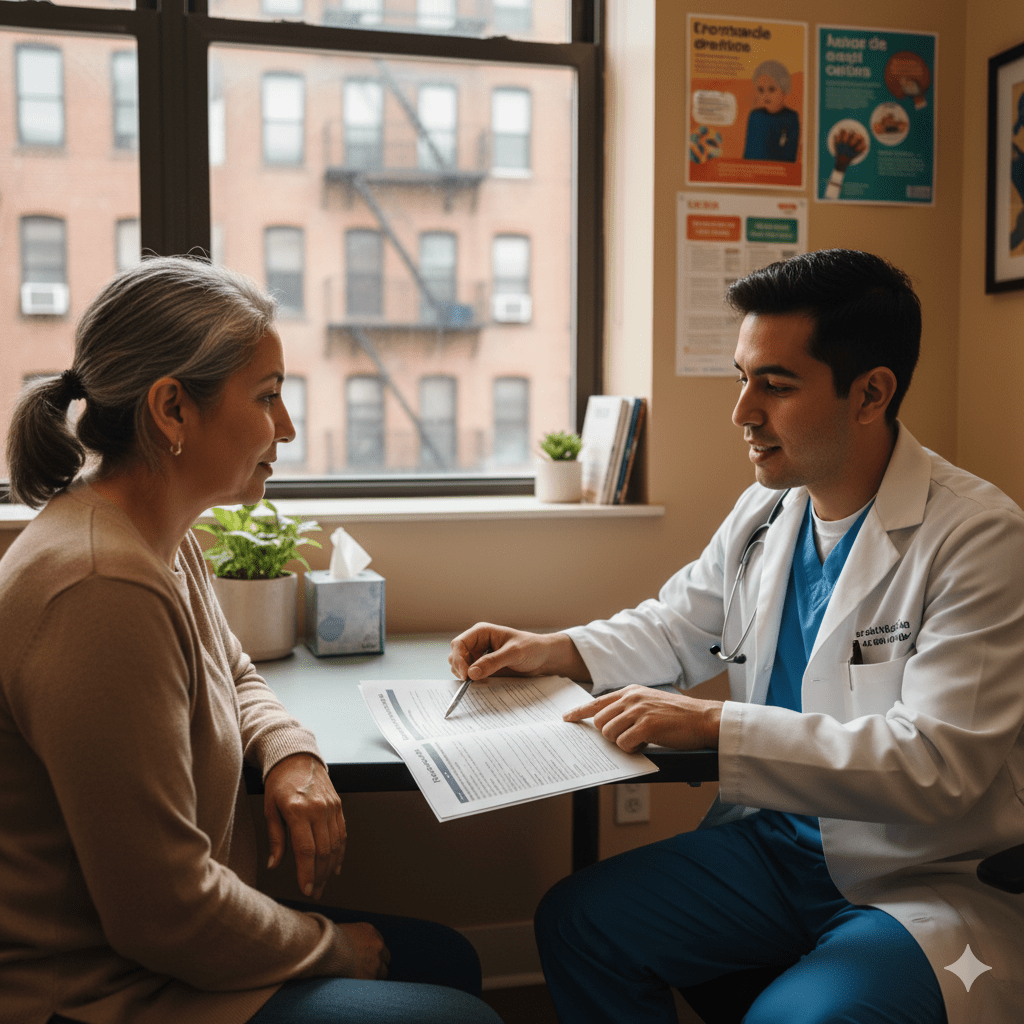
    For many Latinx immigrants in New York, a doctor’s visit is about far more than medicine. It’s about language, trust, and whether the space feels safe enough to describe what hurts. In the Bronx, La Clínica del Barrio has spent decades centering those needs — proving that care is not complete until it’s understood.

    The clinic was established to close one of the most persistent gaps in public health: access for Spanish-speaking communities. In a borough where nearly half of residents identify as Hispanic or Latinx, linguistic barriers still determine who seeks treatment, who delays it, and who is turned away. La Clínica del Barrio responds by offering every major service — from primary and women’s health to dental and mental-health care — in Spanish and English.

    But the clinic’s work goes beyond translation. Its staff are trained to address the social realities their patients face: housing instability, employment precarity, and immigration stress that often manifest as physical symptoms. Wellness education sessions run in both languages, emphasizing prevention, nutrition, and stress management within a culturally familiar framework. It’s an approach built not on charity, but on cultural fluency — recognizing that health outcomes improve when care reflects identity.

    The model stands in contrast to larger hospital systems that rely on over-the-phone interpreters or translated discharge sheets. At La Clínica del Barrio, interpretation happens in real time, person to person. Patients don’t have to explain their history twice, and providers don’t have to guess. That immediacy fosters trust — a currency as vital as any prescription.

    Yet even with strong community ties, clinics like this operate within fragile funding structures. Policy shifts, grant cycles, and staffing shortages can all threaten continuity. Advocates say sustaining such spaces is crucial, especially as federal rhetoric around immigration continues to deter families from accessing public benefits. When fear drives people away from hospitals, neighborhood clinics become lifelines.

    La Clínica del Barrio’s impact can be measured not only in appointments booked, but in confidence restored. Each interaction — a translated form, a familiar greeting, a provider who understands both language and context — rebuilds faith in a system that too often erases the people it serves.

    In the Bronx, health equity isn’t theoretical. It’s spoken, clearly, in Spanish.

  • The Quiet Bridge Between Medicine and Immigration Law

    The Quiet Bridge Between Medicine and Immigration Law

    At Bellevue Hospital — one of the oldest public hospitals in the United States — healthcare is more than clinical. It’s political, linguistic, and legal all at once. In a city where millions speak languages other than English, and where status can determine access, the Immigrant Health & Advocacy Program has become an anchor for patients who might otherwise go unheard.

    Founded to meet the unique needs of immigrant communities, the program provides medical care alongside legal assistance — a rare partnership in a system that often separates the two. For Spanish-speaking New Yorkers, that connection is essential. It means interpreters in exam rooms, legal guidance for those navigating documentation issues, and the assurance that seeking care won’t jeopardize one’s safety.

    While many hospitals have outreach initiatives, Bellevue’s immigrant program works from within — embedded into daily operations rather than attached as an afterthought. Staff collaborate across departments to ensure that patients understand their rights, consent forms, and treatment plans. They also coordinate with legal advocates who help families manage the bureaucratic overlap between healthcare and immigration, from Medicaid eligibility to public charge concerns.

    That integration has made Bellevue a model for culturally competent care. The hospital’s bilingual staff and interpreters serve thousands of patients every year, addressing not only language barriers but systemic ones — including fear, misinformation, and distrust of government institutions. For undocumented or mixed-status families, even entering a hospital can feel like exposure. Bellevue’s program reframes it as empowerment: a right to care, not a risk.

    Still, the program operates within a shifting policy landscape. Each change in federal guidance can ripple through exam rooms, altering who qualifies for coverage or which forms raise red flags. Advocates at Bellevue emphasize that clarity is as critical as treatment. Patients deserve to know that illness doesn’t strip them of dignity, and that confidentiality extends beyond citizenship.

    The Immigrant Health & Advocacy Program represents what public hospitals were meant to be: a bridge between the margins and the system. By pairing legal literacy with medical expertise, Bellevue has built a model that others now look to replicate — one where health isn’t defined by paperwork, but by presence.

  • Inside HOI: Meeting Low-Income Immigrants Where They Are

    Inside HOI: Meeting Low-Income Immigrants Where They Are

    Across New York City, thousands of immigrants confront the same question every time they get sick: Where do I go for help? For many, the answer isn’t a hospital or urgent care center, but an organization that speaks their language — literally and culturally. Health Outreach to Immigrants, or HOI, was founded to make that bridge possible.

    HOI’s work is grounded in direct advocacy. The organization focuses on helping immigrant families — many of them Spanish-speaking and uninsured — enroll in health coverage, find affordable clinics, and understand their rights as patients. In neighborhoods where poverty and language barriers often overlap, that access can determine whether a child receives preventive care or ends up in an emergency room.

    What sets HOI apart is its on-the-ground approach. Staff and volunteers meet people where they already are: community centers, local churches, food pantries, and ESL programs. The goal isn’t just to hand out pamphlets; it’s to build trust. That human connection often makes the difference between a family avoiding care out of fear and one taking the first step toward treatment.

    The organization’s outreach also reflects a larger truth about the city’s healthcare infrastructure — that formal systems often depend on informal ones to reach the most vulnerable. HOI collaborates with local clinics and hospitals to ensure immigrants can access services without discrimination or intimidation, particularly those navigating complex immigration statuses or limited English proficiency. By working in Spanish first, they meet patients not at the system’s front door but at its margins, helping them cross into spaces that once felt closed off.

    Yet the work remains uphill. Even as state initiatives expand coverage, many immigrants still hesitate to seek care, worried that hospital visits could affect future immigration applications. Misinformation spreads quickly; clarity does not. That’s where HOI’s patient educators step in — explaining which programs are safe, what information clinics can request, and how to advocate for interpretation during appointments.

    For New York’s immigrant communities, access isn’t abstract. It’s lived in daily acts of navigation — translating paperwork, asking questions, and daring to trust institutions again. HOI’s model acknowledges that reality. By pairing policy knowledge with human understanding, it offers something rare in healthcare: a system that listens before it instructs.

    The story of HOI is, ultimately, the story of New York itself — layered, multilingual, and constantly evolving. In a city built by newcomers, the right to care in one’s own language is not a luxury. It’s recognition.


  • How NYIC Is Rewriting Healthcare Access for Immigrant Families

    How NYIC Is Rewriting Healthcare Access for Immigrant Families

    When the New York Immigration Coalition was founded, its mission was simple but urgent: make the state’s systems work for the people who keep them running. In New York, one of the most linguistically diverse cities in the world, that goal has often come down to something as basic as language — the right to be heard and understood in a doctor’s office.

    Over the last decade, as immigrant communities across the five boroughs have expanded, so has the demand for culturally competent healthcare. Nearly 30 percent of New Yorkers were born outside the United States, and for many, navigating insurance enrollment or explaining a symptom in English can turn a check-up into a crisis. NYIC stepped into that gap, organizing a network of advocacy and outreach programs that link immigrants to clinics, interpreters, and patient-rights education in Spanish and dozens of other languages.

    Unlike one-time health fairs or pamphlet drives, NYIC’s model is structural. It doesn’t just translate materials — it trains providers, audits access, and lobbies for statewide policy change. Its staff help newcomers understand how to enroll in low-cost or public insurance, clarify what hospitals can and cannot ask about immigration status, and connect patients to trusted community clinics. For many first-generation families, these efforts mark the first time healthcare has felt like a right rather than a risk.

    But the coalition’s work has grown more complicated in recent years. Federal debates over immigrant access to public benefits have sown confusion and fear, leading some families to avoid clinics altogether. Advocates say that’s exactly why state-level leadership matters. NYIC’s outreach teams now partner with local organizations — from Make the Road New York to Bronx Health Link — to counter misinformation and ensure care is delivered regardless of status.

    Health assistance at this scale is rarely linear. It requires aligning dozens of providers, interpreters, and legal partners across a fragmented system. Still, NYIC’s presence has made a measurable difference: more Spanish-speaking patients are enrolling in insurance programs, more clinics are offering translated forms, and more city agencies are recognizing language access as integral to public health.

    The coalition’s work underscores a broader truth about New York itself — that inclusion isn’t just cultural, it’s infrastructural. To guarantee equity, systems must adapt to the people they serve. In a city where over 200 languages are spoken, ensuring that an immigrant can explain a symptom, sign a form, or understand a diagnosis isn’t an act of charity. It’s public health.